
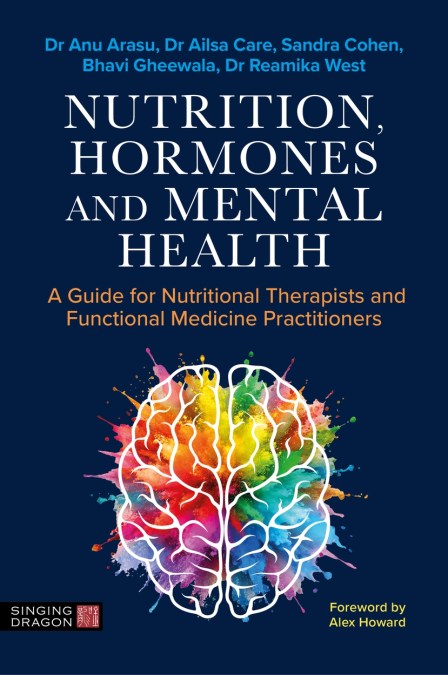
This trailblazing resource bridges the divides between nutrition, dietary patterns, hormones, and psychological wellbeing. It’s interdisciplinary and integrated approach to human health provides a more holistic understanding on how to achieve systemic balance.
The extent to which contemporary food environments impact metabolic, neurological and emotional processes is comprehensively explored, alongside the potential of functional medicine, nutritional science, and neurobiology to encourage better mental and physical health outcomes.
Each chapter is clearly structured into three sections: the problem, the feeling of what happens, and the solution, providing an accessible and methodological framework.
Based on extensive clinical research and experience, Dr Anu Arasu and her team cover critical concepts such as the gut-brain axis, mitochondrial function, and metabolic flexibility, allowing clinicians to develop a much more intricate approach to their client care.
The extent to which contemporary food environments impact metabolic, neurological and emotional processes is comprehensively explored, alongside the potential of functional medicine, nutritional science, and neurobiology to encourage better mental and physical health outcomes.
Each chapter is clearly structured into three sections: the problem, the feeling of what happens, and the solution, providing an accessible and methodological framework.
Based on extensive clinical research and experience, Dr Anu Arasu and her team cover critical concepts such as the gut-brain axis, mitochondrial function, and metabolic flexibility, allowing clinicians to develop a much more intricate approach to their client care.
Reviews
Nutrition, Hormones, and Mental Health provides a thoughtful and clinically relevant exploration of how diet, gut health, circadian rhythms, detoxification, and nervous system regulation intersect to influence mental well-being. The authors translate complex physiological concepts into practical insights that nutritional therapists and functional medicine practitioners can apply in real-world settings. This book highlights an important truth: mental health does not exist in isolation but is deeply connected to the body's biological systems and daily lifestyle patterns. It is a valuable resource for clinicians seeking integrative approaches that support both metabolic and emotional resilience.