
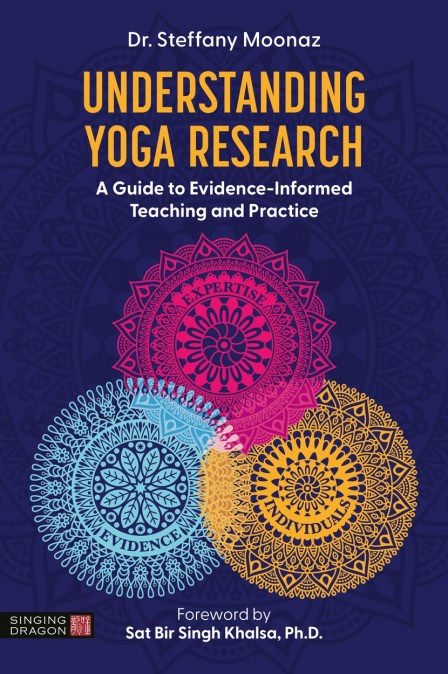
Yoga’s expansion into healthcare, public services and policy recommendations is largely due to the increased volume of research evidence to support yoga’s effectiveness in improving various aspects of whole-person health. This book provides yoga therapists and teachers with an introduction to accessing and evaluating this research and applying it to their practice, their marketing and their collaboration with healthcare providers and stakeholders.
Yoga research and evidence have unique features and this book introduces the reader to the alignment of yoga philosophy with research inquiry through the three pillars of evidence-informed practice – evidence, expertise and preference. The challenges that yoga researchers face and the limitations in applying research to practice are also honestly considered.
Whether to collaborate successfully with healthcare providers, for better advocacy on behalf of yoga professionals, or to inform your teaching, care plan development and delivery, an understanding of the ‘how’ and ‘why’ of yoga research is increasingly indispensable.
Yoga research and evidence have unique features and this book introduces the reader to the alignment of yoga philosophy with research inquiry through the three pillars of evidence-informed practice – evidence, expertise and preference. The challenges that yoga researchers face and the limitations in applying research to practice are also honestly considered.
Whether to collaborate successfully with healthcare providers, for better advocacy on behalf of yoga professionals, or to inform your teaching, care plan development and delivery, an understanding of the ‘how’ and ‘why’ of yoga research is increasingly indispensable.
Reviews
Dr. SteffanyMoonazis not only a brilliant researcher but also a gifted writer. Understanding Yoga Researchis a much-needed guide for yoga teachers and health professionals who want to confidently understand research, integrate evidence-informed practices, and elevate our profession.
Dr. Moonaz offers an opportunity for deep inquiry, curiosity as well as providing a practical framework for the reflection of the complex tradition of yoga alongside a rigorous understanding of research, scientific contemplation, and evidence informed practice.
Understanding Yoga Research reads a bit like a drama about the seemingly irreconcilable differences between yoga and Western science. Steffany Moonaz is a brilliant mediator who negotiates a middle path toward an evidence-informed yoga practice. She also destroys myths and stereotypes about yoga research, and offers a glimpse of the power and possibility that can come from joining these seemingly opposing forces. In fact, she shows us the multitudes of ways that humankind benefits from the wisdom that lies at the heart of both traditions, if only we can stop taking one side or the other. I highly recommend this book for anyone who is interested in building a bridge between yoga and Western science, or who wants to get a better understanding of the complexities and nuances of yoga research.